Friday, February 18, 2011

Tad - Path to the Dutchie [DNT]/Al Qaeda/Demonologists - Split [Teen Action]

Got a pair of recent cassingles here, each with their own specific genre influences.
Tad (not the local grunge mofos) is the musical moniker of Tynan Krakoff, perhaps better known as the CEO of DNT Records. His debut Path to the Dutchie is dub through and through. And I don't been "dubby," lots of bands are that but this tape is creatively and faithfully dub.
The first side is the title track which blinks to a start with synth blips and some groovy-ass organ. Krakoff unleashes one of the most monster motherfucking grooves I've heard in a while. The melody is straight-up infectious and Krakoff couches it in an ever-shifting sound world of heavily effected keyboards, guitar and drum programming and also plenty of oddities (I swear there is a sample from NFL Blitz in here.) It's flat out amazing and gets out of yr hair quickly. This would be sad except the flip side "Version" is probably an even better rendition. Making good use of a reverb-laden melodica, this side takes the previous side's infectious melody and turns it inside out. While the melody holds down the jam, Krakoff sets about, in true dub fashion, to live delay pedal knob twiddling of percussion samples, trumpeting elephants, cackling dolphins and, I don't know, some insane monkeys or something. Totally out of left field and yet totally loveable.
This thing is about the perfect cassingle. Not just because the music is great but because the two tracks sound so great looped back to back over and over. Vinyl ain't gonna do that for you. Having to flip the record over constantly would make it a chore, and I'm pretty sure Tad would come out fiercely against chores. This tape has been out for two months and I ain't sick of this bad boy yet; I am starting to doubt I ever will be. Absolutely recommended.
Switching gears drastically, Al Qaeda and Demonologists are reportedly finding their black metal roots with this cassingle. I figure Bad Brains put reggae and hardcore hand and hand so why can't I do that with black metal and dub for this review? I haven't heard either of these crews so this makes for a quick get-to-know-ya.
Al Qaeda makes the jumpoff with the trio delivering 5 tracks in like 4 minutes. I was probably expecting 45 second raging metal tunes but AQ got something more abstract brewing. Starting out with "Battle Fuck" (a name so ridiculous it just might work) percussive bass throbs and wind blows before some obliterated vocal cord shredding bares its teeth against a weird looped keyboard. End track 1. "Bottom Feeder" actually features a rock band set-up pounding away on a rhythmic riff and the track plays out like an intro to an unmade album. "Shitting Gold" features warbly keyboard against distorted backwards tape loops or something of the like. "Lepper Cuss" opens with a scream and shuffles along heavy on the groove and light on the fidelity. Possibly the tape's standout. It shifts abruptly into "Veritable" which sounds a little too clean to be "black." Nearly glistening tones are sustained all the way through along with some bizarre brushing-your-teeth noises.
Passing to the other side, Demonologists deliver a single sidelong track, "The Bastard Curse." The jam is immediately heavy on the crunch. This is some Oops, All Berries crunch. I can't tell what the fuck is going on underneath all the distortion on this thing. Vocals? Guitar? Keyboard? Drums? There are a few sustained tones near the end but that might just be feedback. I figure if this was made with a combustion engine that runs on goat's blood, I'd get a press release letting me know, right? Then again maybe not...
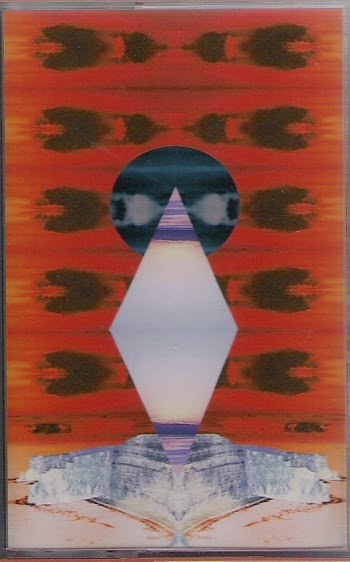
Both tapes are available from the labels. The Tad tape comes shrinkwrapped with sweet prehistoric artwork. The AQ/Demonologists cassette features awesomely bleak xeroxography. A pair of handsome fellers don't ya think?

Monday, February 7, 2011

Terence Hannum - La Repitition [Peasant Magik]

Philly label Peasant Magik dropped an insanely big batch of tapes, 15 to be exact (is there a larger batch on record anywhere?) and I'm very slowly working my through them, with a number of heavy hitters still on deck. This solo release by Locrian's Terence Hannum marks the second tape in the batch with some French cinema inspiration (I wrote up the other one here.)
I haven't seen La Repitition (directed by Bertrand Duma) so I have no frame of reference for this cassette but apparently Hannum has composed a soundtrack to the film. Eight pieces for guitar and accordion are spread out evenly across the two sides. The first side "I-IV" has an effortless flow to it but slight undertones of melancholy and decay. Both the guitar and accordion are smeared together, so unified they're nearly inseparable at times. After the first piece streaks the sky grey, the second (or possibly third) movement finds a guitar in a duet with silence, inching forth a note at a time. Hannum gradually introduces other sounds and melodies which curl around the edges, never breaking the concentration of the central guitar's three note meditation.
The fifth piece that opens up the second side "V-VIII" is quite pretty, made up of alternately looming and luminous accordion tones which eventually becomes susceptible to waves of rushing static. Rolling guitar drones materialize at some point prodding the piece in a more musical direction with spiraling guitar tones embedded in the fuzz. The movements are so fluid, I never notice any marked changes. The side just seems to tumble on by, moving forth, capturing your attention and consequently receding back into the tape hiss before you even realize it.
La Repitition is resigned, forlorn, desolate and empty. Don't know what the movie's about but I'll be surprised if it's a comedy. I think fans of Locrian would definitely enjoy this but Hannum's work here is pretty fragmentary and evocative, a little different than the metal formalism that Locrian is currently interested in. It is fun to hear what other kinds of sounds Hannum has going on up there in his noggin.
The tape is dressed with the utmost professionalism and care as is customary with Peasant Magik. This tape is still in print at the label along with plenty of other great ones so take a gander.

Wednesday, February 2, 2011

Atlantic at Pacific - Weddings [Alchemist]/I and I - The Hardest Part [Alchemist]

A pair of tapes from the relatively young Alchemist label here.
First up is Atlantic at Pacific, the nom de plume of Santa Cruz dude Austin Wood. Wood gets the endorphins flowing right off at the bat with hazy bedroom electro-pop jam (and album standout) "Hallucinations." It's a very simple piece but sturdily constructed with unassuming but still HUGE synth hooks littering the track all over the place. I've never actually timed how long the track is but, damn, I always know that it's way too short. "On We Go" starts out a touch chillier but thaws out over its duration. Initially entering with an almost trip hop drum track, it's almost into DJ Shadow territory when the track reaches full bloom. "Drifting" whirls around on a woozy arpeggio with a drum machine pumping along faithfully before jumping ship for the keyboard solo. Upon its return the piece becomes more focused leaving the fog behind. The brief "50" certainly brings back the hip hop influence, collaging a handful of beats in more misty reverb. The title track stomps steadily underneath a luminous 3 chord synth progression which is given a moment to shine on it's own before Wood expands the piece to full force, including an infectious tinkling counter-melody. It's another piece that could have lasted longer not that it's especially short. And really I should probably be praising Wood's brevity as its a quality too few artists have. "The Sun Melt the Sky" is a rather swirly piece lead by stark a piano melody. That is before it morphs into a late-night downbeat raver. The side wraps with "The Lonely Ocean," an aquatic head-nodder I can envision MF Doom dropping a verse over.
Side number two kicks off with "For the Record," a thoroughly breezy just-go-with-it jam. "Tired" features burly keyboard chords and just a hint of early 90s videogame soundtracks. It's hard to pin down the mood of the track, a touch too intense and rhythmically involved to be somber but not light or uptempo enough to be a peppy pop number. The grey area works for it. "Intentional Pt. 1" is an unusual one for the cassette. There's a zonked monotone vocal drone, a synth snare at an almost punk tempo and bright keyboard melodies. "Summer Nights" is ponderous with a plodding synth progression and chiming counter-melody while the sunnier "I Know You Know" follows it up with a rattling drum track and fuzzy chords. The closer "Who Are We" spreads massively echoing vocals across the track with a sparse keyboard melody plinking away in the ether.
Wood doesn't create the most unique textures out there but his songwriting is pretty fucking solid making for an incredibly pleasant listen for a variety of moods. For fans of takin'-it-easy music.
Alchemist label head Adam Sarmiento is I and I (or i and i as he seems to prefer to have it written) which causes me to ask is that a Bad Brains reference? If it is, you probably wouldn't be able to tell from the music contained on this tape. The Hardest Part is more or less a cassingle but of the "12 inch single" variety, i.e. it lasts more than 7 minutes and it features the single version of the title track as well as two remixes and then an additional track ("Pocahontas.") "The Hardest Part (single version)" has a bit of a similar vibe to that Atlantic at Pacific tape but minus the haze. The vocal presence is much stronger as well (it actually has discernible lyrics) in fact the vocals are the focus. The rest of the elements are kept pretty minimal for the most part, crisp drum programming, fuzzy electro bass and stark piano notes. I think how a listener responds to Sarmiento's voice will probably dictate how he/she feels about the track. I am a bit on the fence regarding that matter myself. Sarmiento doesn't have a bad voice but it feels a little ill-fitting for the production. Or maybe more accurately its the production that doesn't suit his voice the best. "The Hardest Part (Radio! remix)" which I think was done by Austin Wood takes the opposite route of the original. Pushing fragments of the track through loads of effects and minimizing the vocal presence by comparison. It's pretty darned sloshed and, while still using the original as it's source, it refashions the original into a far more "electronic" track.
The second side brings the Nassau Caledonian remix of the title track. It retains the mellow vibe of the original and keeps many of the elements intact but really ups the "club" quotient with big splashy drum tracks and sequenced synth at points. There's some nice synthesized strings at the end too moving the piece briefly into a different realm. The ironic thing about this tape is that the "b-side" is actually far more interesting and my favorite track. "Pocahontas" feels a bit grittier, with wobbly drum programming and an ambling synth melody. There's a cool fuzz organ solo in there too. Again, Sarmiento's voice seems slightly out of place but as more elements enter throughout the song it seems to fit more and more. There's a brilliant little counter-melody with stabs of keyboard notes that is worth it's weight in gold. The song takes an unusual path moving from a slightly abstract, ramshackle drum and synth duet into a fully (de)formed pop ballad forgoing most of the rules along the way. It's vaguely similar to something like Dragging an Ox Through Water, where there's a real solid pop song core but the way it is ultimately outfitted is more than a little unexpected. This little nugget makes me curious about just what Sarmiento can do. I think he may be onto something with this "Pocahontas" thing.
Both releases are available in cassette, compact disc and downloadable formats from the label. Your call but you know the right decision is tape. You can also stream both releases from the Alchemist website too which is pretty sweet.

Saturday, January 29, 2011

Sord - Endless Muselike Visions [Faux-Pas]

A long while back I reviewed Sord's tape Rebuking the Despoiler which was all over the place and and all the more flippin' awesome for it. With Endless Muselike Visions (released on Sam Gas Can's Faux-Pas imprint) the band has morphed into what I would more or less call a pop band but while keeping the bizarre brainwaves of the last tape flowin' strong. I don't know much about Sord's membership other than Zach Phillips (Horse Boys, Nals Goring) is involved. That alone is enough to get me excited but there are a lot more twisted minds at work here than just Phillips'. Enough of the intro...
"Racer Boys" kicks things off with heavy tape damage, speedy bass piano arpeggios and a breakneck narrative (I think?) about racer boys. "Dada" (as in papa) is a pretty skewed attempt at a barbershop quartet couched in plenty of clutter. "Not the Woman" is their take on the tender, heart bearing ballad and it's pretty darn good ("How many times have I told you/I am not the woman that you thought I was"). There's a pretty excellent, smoky nightclub jazz piano solo in there too that gets roughed up by a snagged tape. "Life is a Plant" is half piano pop and rambling harsh noise vocals. "Nature Identical Rose" has Chris Cooper's name attached, perhaps he provided the cluster of chattering, sci-fi blip-bloops that dominate the track. "Onion Rings" is actually about onion rings and eating them with a girl over fuzzy, frenetic keyboard melodies. You would guess that "The Way She Moves" would be another pop track but instead it's the noiseiest yet, with loads of fuzz, feedback and garbled tape. Unlike the weirder non-music "Palestine," "Lebanon" is a bouncin' song about Lebanon. Although, the phrase "My home town, it's Lebanon!" is making me wonder if it's about Lebanon, Oregon or another Lebanon in the USA instead. "Chancing" is an anything goes, everyone's junk on the floor piece which segues into the fuzzed out lullaby of Dave Berry cover "Stranger."
The second side is especially good, starting off with "Cameron," an angular piece with a bit stronger guitar presence to go with the tinkling ivories and the multitude of distorted off-key voices. "Bad Ass Shoes" is a pretty sweet a capella interlude about some bad ass shoes ("he won them in a contest!") "Kill You" is a standout track. Imagine Beat Happening, then imagine them having fun and your in the area code of this track. It's got the best lyrics on the tape too, the infectious chorus goes "I'm gonna kill you!/And your family too!/I'm gonna kill you!/And all of your friends!" "Tyler Toys" is a great interlude of sped-up "jazz," possibly a keyboard demo or something. The most beautiful melody of the tape comes on the oddly titled piece "Skit." It features some sublime keyboard work which I'm assuming is coming from the fingertips of Mr. Phillips. "I Don't Want Your Fucking Head" is straight up D.C.-style thrash that doesn't even make it to the half-minute mark. "Neumonia" is another speedy piano track about driving somewhere fast, still not quite sure what it's about. There are some skronky ("Know What"), rockin' ("Dog Trena") and silly ("Doo the Right Thing") interludes leading up to another favorite "Rold Gold" which is an incredibly catchy two minute noise pop tour-de-force. The funny thing about this tape is that my favorite track is one that I'm fairly certain Sord had absolutely nothing whatsoever to do with. "Goodby Goodnight" is a fantastically bitching Asian big band pop song from I-don't-when. Sooooooo goooooood. You can't help but just groove to it.
Tearing through 24 tracks in under 30 minutes the tape is a totally excellent ride and there's no way to get bored. It makes for a good cure to those drone doldrums we all experience sometimes. The tape is still in print at the label for a very sweet price of 5 bucks.

Monday, January 24, 2011

Caldera Lakes - Caldera Lakes [Død Univers]

Caldera Lakes are back! It has been a little while since the duo dropped 3 great tapes on Deathbomb Arc, 905 Tapes and Blackest Rainbow and an even better CDr on Sentient Recognition Archive. Fine young upstart, Død Univers, did a nice job enshrining the tape in a package that's translucent through and through.
The first of two pieces on the first side is "Contained Etherealness." It's a clunky title to be sure but, on the other hand, it's pretty darn accurate. What has always made Caldera Lakes so interesting is the interplay between harshness, presumably supplied by Eva Aguila (who operates as Kevin Shields, the finest harsh noise artist around,) and trippy beauty which I am assuming comes from Brittany Gould's (a.k.a. Married in Berdichev) end of the bench. The piece shivers and quivers, with Aguila's trademark blips and shudders gliding ominously underneath, but it is really the glowing tones of Gould's voice that dominate, glistening and cascading across the piece. Rainsticks and reversed guitar hang around, but it really is all about the voice flowing into every nook and cranny and then how Aguila tastefully provides more confrontational counterpoints throughout. It's a piece that grows more and more gorgeous each time I listen to it. Though Aguila played things pretty soft on "Contained Etherealness," she gets her revenge on "Undefined." Heavy static rips through speakers initially, before Aguila fights to peel it back revealing Gould's mystic vocal melody and patient chiming bell. The noise teeters back and forth trying to contain its rage and frustration, grinding thunderously like the stuck ignition of a hurricane. Gould is up for it and attempts to sing above the din but carnage already has this song in it's back pocket and ain't giving it up.
"The Rune Escape" expands over the duration of side B. A series of bells jangle continually against soft but uneasy tones and unstable crackles. The duo keeps us in suspense, do we have another "Undefined" on our hands or a "Contained Etherealness"? Or something different altogether? Probably the last option, I'd say. The duo is built around aural texture but this seems more textural than usual. Or maybe it's that there are just a lot more textures at work at once in the piece. There are no vocals for a long time. It's clatter headed from two opposing arenas, acoustic and electric, somehow bonded together. As Gould's voice enters, she doesn't sing so much as speak and far to hazily to be intelligible. Aguila's electronics exhibit signs that something just isn't quite right on this spacecraft providing split second signal interruptions that seem to cause the rest of the sounds to hold their breath. And the Lakes go 3 for 3!
Caldera Lakes have definitely developed since I last heard them. Past releases featured two opposing aural personalities that wrestled constantly and dynamically and I loved it. This release finds the two integrating tenuously and I love it. Gould and Aguila continue to do no wrong, and more importantly, they continue to do something that no one else can.
This tape is absolutely worth grabbing, particularly if you've never heard this duo at work. This being it's second release, Død Univers has made a statement, putting a lot into creating this unusually fitting package for these otherworldly sounds. I'm looking forward to what both Caldera Lakes and Død Univers throw at us next.

Monday, January 17, 2011

Aaron Zarzutzki & Nick Hoffman - Psychophagi [Pilgrim Talk]

This is the first full length from this Chicago duo (a cassingle was released simultaneously.) Nick Hoffman is a very busy man, running the Pilgrim Talk, Ghost & Son and Scissor Death labels as well as recording solo as Katchmare. Hoffman's work in duos is often some his best such as in Veyou or Back Magic but his teaming up with Mr. Zarzutzki is certainly his strangest and probably finest to date.
What I like about Psychophagi is it pulls no punches. I don't mean that in the typical aggressive/violent manner, but that the sounds delivered are immediate, tactile and incredibly detailed. There is no added murk or misty blankets of effects here. Just pure (whatever that means) sound.
Zarzutzki's weapon of choice is a turntable appropriated as a grinding wheel of sorts. Hoffman's tool chest is kept a little vaguer as an assortment of electric and acoustic objects. The first piece, "(Grotesque 1)," which takes the entirety of the first side, begins with something resembling an oscillator but with a more organic timbre. Another sound which could potentially be a horn of some sort, though I doubt it, joins briefly. The aforementioned grinding 'oscillator' sound, which I am going to guess is Zarzutzki's turntable, is the focus as it weaves a range of sounds over a mild mechanical hum. A few pieces of metal clatter cut through with sharp clangs and the turntable appears to get switched off, dimming the piece momentarily into silence. Skittering percussive noises break the silence and something that sounds akin to a few people whistling acts as a counterpoint.
The material on this LP was culled from a live performance and it feels like it. There is a patience at work; the pieces move forward naturally as they may not have with editing or overdubs. The piece continues to crawl forward on strangled tones; there were definitely many objects under duress during the making of the record. It is kind of interesting to hear how these mostly "non-musical" objects end up capturing the sound of a drum roll or, as previously mentioned, a oscillator or whining trumpet, to see the relationship instruments and "non-instruments." That even though the sounds produced are relatively similar, the method of production drastically changes the dynamics and compositional nature of a piece of music. The first side culminates with a thicker palette of sound which builds somewhat like a crescendo before ending on a squeak and silence.
I might as well say this now before I write any further. This record is for people who love sound, not just "music," but the phenomena of sound. If you fit into that category than this record should be pleasure to listen to.
The second side begins slightly more aggressively with some loud cling-clang. A mild but persistent sine-wave feedback tone hangs around with a loop that manages to fit somewhere between melody and rhythm. This second track "(Grotesque 2)" is much more rhythmically inclined, disseminating strange little grooves throughout its duration. Insistent blares of bowed metal litter the piece as well, continuing to carry it forward in all its unsettling, prickly glory. Underneath the louder swells is a continuous hi-pitched tone, sounding like a violin section slowly dragging 500 ft bows across an open string. A new bassier tone joins up and the pair has a nice little duet. It's the strongest, most “stand alone” piece on the LP; it seems most confident in where it’s heading. "(Grotesque 3)" wraps the record up. At the outset it’s much more percussive until settling in with a quiet tone sounding halfway between a free sax solo and a Furby. From there, the record moves into one of my favorite passages which is nearly silent. A sine tone just this side of existence hangs in the ether and every so often a sharp percussive hit shatters the near-silence. It's hard to explain what exactly makes that section so arresting but after having the record demand so much attention, you are listening so hard that it is a tad surreal to feel like you are hearing silence. The rest of the piece brings in deep groans and plaintive, nearly melodic electro-acoustic drones ending on a relatively pleasant note.
This is a very elusive, enigmatic record. It will probably captivate some and be met with disinterest from others. I’m certainly in the former camp and I hope there's plenty more to come from this duo. It isn’t the most brilliant record I’ve heard but it's one that I still haven’t been able to put my finger on, and that quality will keep me listening for a long time.
The record is outfitted with killer artwork (as usual) by Nick Hoffman. It's a very nice package all together. It's still available, in an edition of 118, and at 12 bucks postpaid that's a darn good price for such high quality visuals and audio.

Saturday, January 15, 2011

Plastic Boner Band - The Way of All Flesh [Power Silence]

Not really sure what to make of this project's chosen moniker. It doesn't sound "plastic" or like a "band" and, well, putting "boner" in there is just silly. The music is not though.
The Way of All Flesh is out for blood from the get go; the first of four untitled tracks unleashes an in your face, prickly static swarm, like someone let the angry hive loose underneath yr beekeepers mask. There's plenty of crushing rumbles in there too. The track attacks from all sides really. The feel of the record is vehemently bleak. Imagine an iron maiden (the torture device) crammed with a thousand sewing needles. You haven't got a shot in hell to catch your breath. The only "relief" you might find is when the hi-end harshness dies out for a couple seconds. Calling this "noise" is the fucking truth. There's not so much as a hint of melody here; all malice all the time. The second track lingers in limbo, droning in a mid-rangy sphere still with all the brittle fizz intact. The track will send you back to all the nightmares you've ever had in the dentist chair. A choir of tiny drills, chipping away a flurry of enamel. You finally get a chance to let the blood pressure mellow out with the next track. I've got a bit of a head cold as I'm reviewing this and man this bit of peace is much appreciated. A pulsing synth tone enters and exits in a cycle while a gust of wind blows. More loops creep in ever so patiently. Moving from the extreme minimalism of the first half into the slightly more, though still sparsely, populated second half, what sounds like a crusty locked groove grinds endlessly against quivering, barely-there drones. A hypnotic little rhythm develops almost making me forget the record's anguished first 20 minutes. The final track brings back the bristling noise but also manages to retain traces of the groove that was established in the previous track. The piece stomps forward with an irreverent melody. The signals are still steeped in saturation but this track has a trace of humanity to it. The modest melody struggles forward against the blizzard, sometimes just trying to hold its ground. It's the little engine that could for the noise set. Locking in with what could viably be an impending meltdown alarm, the track begins to hypnotize until shifting the gears, slowing the loop down a little. Nearing the halfway point the beat briefly cuts through the feedback fog. In spite of the still oppressive presence of unstoppable white, black, pink, green (etc.) noise this track comes off as slightly friendlier as there are flashes of melody, rhythms and general warbliness as opposed to the gridlocked brain attack of the first two. There is more of an evolution to the piece. And I always find squirrelier noise freak outs to be a warmer and more fuzzy experience than having a static warhead slowly crammed down my ear canal.
Despite the noticeably more "pleasant" second half, the first two tracks are a relentless, heavy duty ear cleaning; you like it or you don't. The tracks could probably put the scare in anyone, the question is will you embrace the fear?
The disc is apparently a CDr but everything about it (shrink wrap included) seems pro-pressed so good work there.

Wednesday, January 12, 2011

Hammer of Hathor - Vroom Psycho [Field Hymns]

Following up the last review of tapes on Field Studies, is another sterling young label, this time outta Portland OR, called Field Hymns. Hammer of Hathor, also from Portland, is the subject of this review, the duo of Mark Kaylor and Heather Vergotis doing their terse, veiny improvmpositons with electric guitars, drums, trombone, tenor sax, analog synths, 1/4" tape loops and live tape processing. The only other release I've heard from HoH was their tape on Stunned which had some good stuff, but they're sounding sharper and leaner (and maybe a little bit meaner) on Vroom Psycho.
"Mt. Tabor" kicks off with tapped cymbals and a repeated guitar phrase. The track seems to be stuck in first gear, building towards something. When the levy breaks, it's modest but still a little cathartic. The drums give in to the groove and guitar begins to lay into its riff a bit more. When all's said and done though, it comes out like an 8 minute intro. An exercise in hypnosis. A bit like that Ex Models' Chrome Panthers record minus the copious amounts of octave fuzz, ring mod and nervous energy. This stuff sounds way more strung out than hopped up. "Alice and John" (a tribute to the Coltranes?) is a strange piece of trombone and sax. Each moves in short bursts, sometimes they seem to align and at others they don't seem to notice the other horn in the room. It features a similar approach to "Mt. Tabor" where repetition is pretty key but HoH go in a different direction not making their playing painstakingly exact, instead letting it wander drunkenly. "Air Pain" features a loopy, atonal guitar. Two of them actually. After a skronky conversation they lock into a seasick melody, sliding back and forth, back and forth. It is interesting how HoH dismantle the idea of the brief, repetitive riff over the course of the side ultimately descending into dual free guitar gibberish. You know how much I love guitar duos, so you know I'm on board with this track. Lunging between detuned primitivism and what are more or less riffs, the track as a cool vibe. The band obviously has interests broader than just the guitar, but they have a really unique dynamic as a guitar duo that I wouldn't mind seeing explored and developed further.
Side B kicks off with "Invincible Armour" which in my opinion is the most smokin' track on the tape by far. I don't mean to disparage the rest of the tape at all but simply share the straight-up "killerness" of this bastard. A guitar leftover from the previous track skronks around for a bit and another six string shows up quietly playing a simple riff. It gets louder little by little until BOOM, the drums enter out of nowhere and blow the track wide open. It's so damn grooving and heavy and dead-eyed and tough as nails. The track's relentlessly minimal rock 'n roll stylings could beat the masters themselves, A Frames, into a coma. Gnarly genius at work here. "For Guylene" closes out the tape. Commencing with offset loops of stuttered hi-pitched melodies and continuing with them too, the prickly tones simmer for around 8 and a half minutes repeating in slight permutations. At that length it's not the most engaging jam on the tape, particularly after following up the fireworks of "Invincible Armour," but I guess once you get your fill you can always fast forward to the end and start over on the A side. Or am I violating the cassette code of ethics in suggesting that?
There's some great stuff here, it's not totally cohesive as an"album" but I'm not really sure Hammer of Hathor is too interested in that sort of idea anyway. They have their style and they'd rather explore it through a number of instrumental avenues on a piece by piece basis.
Excellent(!) artwork all over for the tape, totally Vertigo-era Saul Bass-gone-futuristic stuff. Much adulation to Field Hymns. The tape is pro-dubbed and comes with a download code. Still in print.

Monday, January 10, 2011

56k - VR42C-1 [Field Studies]/White Prism - Vertical Trace [Field Studies]

These two tapes are some of the first releases from a very promising young label out of Chicago called Field Studies. Each of these projects involve Josh Burke too, so Field Studies ain't doin' too bad for themselves.
56k is yet another moniker for Mr. Burke in solo mode. He keeps things pretty brief here moving though 6 pieces of exploratory synth work in 20 minutes. "Calls in the Night" fades in with a nice groove, insistent yet unhurried. Stringy, filtered synths weave their way around, getting tangled in the beat. The piece doesn't really get developed at all, but it doesn't really need to be either. "The Monitor" spikes the new-new age vein versus the cyborg cruisin' of the first piece. Chilly keyboards flutter like seagulls and pretty soon we're onto the placid "One Life" which absolutely feels like something DJ Shadow might have sampled for Endtroducing... if, you know, it had existed back then and he was into limited edition tapes. Gleaming globules of synth merge and spread coating the inside of the skull like cigarette smoke coats yr lungs. "Vibrations" continues along the same path, but it somehow has more of a twinkle in its eye as it soars along on its magnetic strip.
The next side kicks off with the aptly titled "Software Mind" which sounds a little thicker and more expansive than the last bunch of tracks. A bubbly sequencer percolates through the ultraglide synths crashing the party with a curveball. Well, "crash" is an overstatement, it's more just like it hangs around in the bushes outside the party. Either way, it's a nice piece. Kind of like the first side, my favorite track is the odd man out. "Create" is the best cut of the tape, a cascading, shining shrine of keyboard effervescence. Lovely melodies tumble into themselves endlessly making the wishing well deeper and more magical by the second. Great call to make it the finale.
White Prism finds Burke joined by Ben Billington, drummer in the killer free jazz trio Tiger Hatchery. As far as his work outside TH goes, I've heard his gnarly, exhausting 92 minute drum solo as part of the Brave Grave series on 905 Tapes but I've yet to hear Quicksails, a synth/percussion project of sorts that I'm guessing has more in common with White Prism than Billington's work elsewhere.
Vertical Trace is more elongated that the 56k tape as it spreads 3 pieces over a half hour. Otherwise it has a very similar feel to that tape, muted blue-grey sustain as the cover art implies buffered by spacey but tasteful textures. Where I think White Prism maybe takes a little bit of an edge over VR42C-1, and this may just be do to having an additional brain at work, is that there's a little more depth and subtle details that reveal themselves after multiple listens. (That said I think 56k may be my pick between the two.) "Paramnesia"the first piece is very soothing, managing to be weightless without letting itself get too adrift and aimless. Over the side long duration, the piece covers a good amount without straying too far from the signpost they initially started at. Coming out of the misty keyboard dew, the track slides out on a sequenced synth melody.
"Above the Dream Grid" picks up where Side A left off eventually leveling off into placid keyboard ruminations. The piece does settle into an impeccably lovely lilting melody which seems to float just out of reach until cleanly evaporating. One the best moments of the tape to be sure. "Shadowcrest" is the most robust piece here and the darkest as well. While the others aimed close to the ethereal bullseye, "Shadowcrest" allows itself to get enveloped in darker, nearly hissing synth tones. Who would have thought White Prism would end in a black hole.
Both tapes are pro-dubbed, in nice packages with a good dose of geometric shapes, planes and lines. Each is still in print and limited to 100. If this is yr steez, get a move on.

Tuesday, January 4, 2011

GDC - Jours Avec Jennie [No Label]/Horse Boys - III/IV [Feeding Tube]

I am ashamed that it has taken me this long to write about this GDC cassette. Vermont pop genius Zach Phillips (Horse Boys, Sord, Nals Goring, OSR Tapes etc.) has delivered unto us a motherfuckin' faux-French masterpiece and I've been sleeping on the review for months! The fact that I received the tape literally a week after he finished recording it(!) makes it only that much worse, though on the day I got it I did listen to the tape 5 or 6 times in a row in my walkman as I walked around in the sun for a few hours. So here I am to ask forgiveness and shower the copious amounts of praise on this tape that it deserves.
After "Les Regles" a half minute opener of pounding synth chords, a refrain of "I don't make the rules, I just make them" and background "Hoo! Hah!"s Phillips brings the heaviest hitter. "Leur Heure" is one of the best songs of the year an absolutely gorgeous mid-tempo number featuring French lyrics and too many wonderful synth and vocal melodies to count. It is an incredible specimen of pop craftsmanship, the song takes unexpected turn after turn growing more and more infectious and lovely. Serious masterwork as far as 2 minute pop songs go. "Why Did You Reste" fills its 52 seconds with a catchy walking bass line and vocal melody to go along with its Sega Genesis-style synths. "D'une Journee" is another wondrous track featuring a bevy of keyboards all chiming in with their own unique melodies and voices. Though the tape has a very modest and warm feel, there is some serious ambition here with the staggering amounts of synths and melodies (even copping one briefly from "Poker Face") and multi-tracked vocals. I'm happy to report that Phillips' ambition is fully realized as well. I'm reminded of the mouth organ in Huysmans' À Rebours where each new melody and voice is a new and surprising flavor on the palette. "Les Histoires" changes things up beginning in a jaunty, vigorously strummed acoustic guitar in addition to the keyboards, adding a touch of rawness to the thoughtfully composed nature of the tape. "Flow Vait" comes off as rather minimal in the midst of the other songs here considering it only employs a few keyboards and vocal tracks. "Statues Francais #1-3" is the first of a series of instrumental interludes featuring piano; they make for very nice changes in pace as they still have the same heart but the stripped down dynamic breaks up the album in an effective way. The interlude leads into "Haut Contre Bas" probably the second finest piece on the tape. It kicks off a seriously infectious melody and light-footed French lyrics that skip through the song. There's an uptempo hi-hat via an unseen drum machine which pumps up the energy as well as Phillips delivers some soaring solos and choruses. Really brilliant. "Statues Francais #4" features a bit of vocals over warbly, rolling piano making for a nice lead into "Comment J'ai Aime Une Fille" which is a grand 30 second piece brimming with 18th century classical extravagance and a bit of sports arena excitement. Great way to end the side.
The next side opens with the jittery grooves of "Statues Francais #4" and continues on with the title track, an unabashed piano ballad. "Reverser Temps" is another standout in an album filled with priceless moments. It features one the prettiest melodies on the tape, and thankfully Phillips takes time to even give it a solo spot in middle of the piece. "Time Time Time Time" features dueling piano and synth formed into a boney ballad. "Couer de Lion" unexpectedly moves in between stately ballad and ambling doo wop and both are good with me. "Idiomes" is another fantastic selection. Over a relentless, pulsing bass synth riff, Phillips himself carries the melody delivering some of his best vocal work on the tape. I only wish the piece was developed past a minute and fifteen seconds. "PPPPP" is a cute little song with a slight circus feel in the melody. "Statues Francais #7-13" is a nearly 3 minute pastiche of various piano works. "Hotels D'Aeroport" barely makes it over a minute which is a damn shame as its the peppiest, most feel good thing on the cassette. Seriously great composition, I am amazed at how much Phillips packs into a minute. "Statues Francais #13" wraps things up unassumingly with more piano fragments.
One the best cassettes of the year and hands down the best pop record I have heard this year. This is a must hear!

Also along for the ride is III/IV, Phillips's first tape on Feeding Tube under his Horse Boys moniker.
The first side, known also as III, is probably the weirdest thing I've ever heard come out of the Horse Boys mouth. It's a half-hour scatterbrained blitz of upright piano pieces, plunderphonic shenanigans and tape mulch. It's such a clusterfuck that there's an accompanying list of the 20 "tracks" denoting from which second to which second they last. Even with such a detailed map it's easy to get turned around in the madness.
Beginning with two intros, "Intro to Bundt" is brief, part TV static, tape crunch and pretty piano. "Intro to Jim" revs into motion a chugging bass piano melody before splintering into piano improvisations. "Bill Wells Data" features more piano sketches but ends with a nice duo piece with a horn. "Intro to Blintz" has a cool eerie organ that duels a little with the piano which eventually takes over with Thelonious Monk-on-speed melodies. "Xmas + Easter" is the first track to hit the 3 minute mark and starts out with a shambling trio arrangement of piano, guitar and tambourine. Surprisingly, their jam lasts nearly two minutes before being interrupted by a conversation of two flamboyant males, which is in turn interrupted by barking dogs and lo-fi ivory tinkling. Phillips is built for speed on "TV Tour" tearing though the keyboard before getting cut off by pause button play, next comes a really beautiful melody again cut off by the pause button and the track moves forward in the same fashion. "Intro to Kings" features more cut-up banter with the occasional piano flourish. This continues into "How the West" which is probably even weirder, squeaky stutters (tape manipulation?) and sparse piano notes. "House Call" brings in a synth to duet with piano and they make for a very nice team for about 30 seconds. "Birds Toucans" is one of my favorites as it delivers an unusual multi-tracked piano piece and strangely enough, Phillips lets it run for almost the duration of the track before cutting it off! 'TV Tour" is just weird with frenetic pitter patter and icy, brittle piano notes. Organ turns up in the middle of the piece and it's a very welcome addition. Phillips stitches together more pretty piano fragments and found-sound conversations for the rest of the track. "Lessons" opens with a cyclical piano melody that slowly morphs over the course of a minute or so before it jumps ship and another multi-tracked piano piece steps in. There is then a flash back to the trio piece that cropped up earlier. The side is a very odd piece of patchwork, pretty difficult to get a handle on even after multiple listens but there are certainly some treasures littered throughout.
The flip side IV is an interesting transitional work between Phillips's Horse Boys style work and his work on the GDC tape. Beginning with a standout, the stumbling pop song of "Lime." Despite how many great melodies Phillips throws at you, he manages to keep you off balance through the piece so you can never quite nestle in like it seems you will on first glance. "PD Jeep" sees a few pianos and keyboards dueling it out with a random drum machine, making for an unusual jazz-pop morsel. "Friendship Rd" is a friendly pop ditty that might as well be a children's song "Friendship road, my friend/There is no other road" with a jaunty, jiving piano to match. "IV" is another very good pop song caught in a whirlwind of 4-track experimentation. There's a little of everything in here it seems, hearty doses of piano, keyboard and voice but also some bongo drums(?) and sound manipulation. "Cole" is a short piano instrumental which segues into "Days on Earth" which may be the best track on the tape. It's hard to describe the relentlessly buoyant nature of the track, even with all the unexpected left turns Phillips throws in over its 4 minutes. The song fits somewhere in between old timey, new wave and 60s psych pop. It's strange but, man, will I take it! "IX" is a very elegant 18 seconds and "Tin" flirts with being a high-energy rave-up but decides to keep things plowing at a more manageable level, saving the real wackiness for loopy synth solos. "D" is a good one that lets the vocals carry the melody for a change and "Kanabala" and "Peach" segue into the longest cut on the tape. "E Key" puffs its chest out with a striding lead off melody, occasionally changing things up with some lo-fi drum programming on the chorus before ever so slowly bowing out. Phillips sends the tape off with "Make the Call," a vaguely Beach Boys-inspired piano pop piece complete with a whistled outro. A perfect tune to go out on.
In my estimation IV is the stronger of the two sides but, hey, I got a pop heart so what do you expect? The tape doesn't top the first Horse Boys cassette on OSR Tapes but since the fine folks at Feeding Tube have put this out in an edition of 200, unlike that first tape, you actually have a good chance at snagging one of these.
Basically, what you should take away from this review is grab anything Zach Phillips gets his fingerprints on!

Saturday, January 1, 2011

Various Artists - A Fundamental Experiment [No Label]

A Fundamental Experiment is a compilation LP curated by Matt Erickson (Sudden Oak, Radiant Husk, the Bezoar Formations label) as a benefit for his bandmate in guitar/sax duo Sudden Oak who miraculously survived a fall from the roof of a three story building. You can get the full story here, but needless to say it's a good cause and all proceeds from the sale of this record go to it.
As far as the music goes, Erickson has assembled a who's who of the current psych scene along with a few names unknown to me. The record exists entirely of Neil Young covers, though I am not clear on how that came about I will take it. Julian Lynch kicks off with "Sedan Delivery" delivering a shambling, auto-wah'd ditty brimming with filtered vocals and tambourine. Metal Rouge contributes "Helpless" steeped in more fuzz than I almost thought possible. The vocals are obscured to the point of unintelligibility and the lead guitar ripples and scratches in static. The only thing coming through semi-clearly being the lethargic thud and crash of the drums. Good track. Sam Goldberg flips the script and brings a straight-up ambient cover of "Transformer Man" turning the electro/new wave jam into an atmospheric composition. Swanox comes next with "Thrasher." There's a minimal approach here like the Goldberg track except Swanox retains the "songness" of the original with just a voice and a vigorously strummed, fuzzed out guitar. On what has to be my favorite cut of the record, Sun Araw infiltrates "Barstool Blues" with his sleepy eyed hippie-chic for a match made in heaven. Generous helpings of fuzz and wah, great guitar leads, relentlessly mellow conga and fantastically buried falsetto vocals little the track. So, so jammable. I love it.
Side B opens with Stag Hare doing "Cortez the Killer." Layering sheets of echoing guitar on lackadaisical drums and topping it all off with soft, effected vocals, Stag Hare delivers a real nice, almost breezy rendition. Laurentide Ice Sheet, the first of three names unknown to me, changes things up with a relatively faithful cover of "Southern Man." Or at least about as faithful as a synth & drum machine cover can be. Anguished vox and octave-fuzz-laden guitar leads pave the way though. Another one of my favorites here. Trevor Healy brings an acoustic guitar (or perhaps a banjo) along for the ride on "Round and Round" which is the first of the record I think. He keeps with the overall vibe of the record supplying enough reverb to smooth out all of the corners. " Avocet is the last of the new names and their cover of "Expecting to Fly" is pretty darn good. Beginning sparsely with vocals and a lonely thumb piano, the track recalls Larkin Grimm and other such minimal folk artists. Matt Mondanile sheds the Ducktails moniker for his very capable and unadorned cover of "Look Out for My Love." Sticking strictly to voice and acoustic guitar Mondanile really just lets the quality of the song shine through. Very good track, another favorite.
This a good collection of material and the Neil Young aspect of it unites the record in an interesting way. If you like any of the artists involved here (including Neil Young) you should definitely pick up a copy of this seeing as your money would be going to a very worthy cause. Edition of 300 with silk-screened jackets and insert, though apparently Matt is down to less than a hundred copies. Get the record here.
Oh, and check out Sudden Oak too if you haven't, they rule.

Sunday, December 5, 2010

Rats - Rats [No Label]

When it comes to jazz, I don't typically go for the smooth stuff or the soft stuff or cool stuff. I prefer things fiery, plenty of wrong notes to go with the right ones and well, you get the idea.
Enter new LA trio Rats whose music fits into the former camp much more than the latter and, inexplicably, I love this record. I don't know if this is "jazz" exactly, at least not how it's often conceptualized. It certainly isn't "soft jazz" or "cool" or any of the styles I mentioned earlier. Maybe it's "post-jazz" or something, but I don't really understand what that's supposed to mean. Anyway, screw genre labels and all that cause this is some great stuff and I'm just gonna go ahead call it jazz and be done with it.
Now that unnecessary intro/tirade is over, Rats is a trio of Eric Kiersnowski on baritone guitar, Jonathan Silber on tenor sax and Kelly Kawar on bass guitar. Eric and Jonathan both played in Godzik Pink, a somewhat similar but much more hyper and skronky combo, which was one of my favorite discoveries as a 14 or 15 year old. Anyhow, not really why I am sharing so much of myself here, onto the sounds.
The first of 11 tracks, "Milan Slaw" is a mellow introduction to the record. Guitar and bass strings intertwine as Silber contributes a gentle, fuzzy sax solo. They all break into a fantastic arpeggiated melody that is far too brief before allowing the rest of the piece to languish lazily in the warm sun. Silber delivers another great solo as Kawar and Kiersnowski pick out an accompanying melody with precision. The record is so consonant and well-put together that I figure it has to be largely composed; if I found out this was completely improvised my head would explode. The dexterous trio still certainly allows for improvised touches, such as in "Curly's Notebook", but to be honest it's actually pretty refreshing to hear someone take the jazz vernacular and move in a slightly different direction, creating something incredibly beautiful without sacrificing any compositional complexity whatsoever. There definitely seems to be an emotional component to Rats' music but it's never sentimental. They are certainly unafraid to throw in a jarring note so when they deliver a sweetly melodic line it's almost breathtaking. Plus, they tend to drop a gem and simply move on to another, rarely repeating themselves.
"Raunchy Fax" flirts with raucousness with a phenomenal, frantic little heat-up before slipping into an elegant, yearning melody and then jettisoning back into the clattering guitar and sax bleats of the first half of the track. I mentioned that Rats rarely repeat themselves, well they indulge me in what is absolutely the most gorgeous, untouchable piece on an album of winners. I'm counting the days before some smart director selects "It's Lonely at the Top" to score the pivotal scene in his or her film. It doesn't matter what the scene is, whether actors can act or if the cinematography is shit; this song is so powerful and heartbreaking, it will choke you up. Lead by a perfect, lilting saxophone melody, the guitarists provide subtle backing before slowly unfurling some lovely lead lines of their own the saxophone gently hums. Unspeakably magical. "Sentimentally Titled" is jauntier thanks to the "rhythm section" of Kawar and Kiersnowski but its another melodically rich piece that evolves persistently throughout its two minutes and eighteen seconds. "Bee Charming" mostly plays it cool with flashes of urgent sax pushing their way in. "Squirrels Gone Wild" features an especially complex web of notes as each instrument weaves in and out of each other adding a bright, bubbly melody to finish it off.
I like the first 2:15 of "Pumping Irony" fine but man, the melody that comes at the last minute and a half is some of Rats' best work on the record. It's a fleeting 20 seconds and I am perpetually hitting the rewind button but it also marks a wonderful shift in the piece.
"Wasabi Break," at six minutes, is the longest cut on the record (most fit snugly between 2 to 4 minutes.) Rats use the extra time for an extended breakdown which sees an ascending melody dissipate into a ruminating string (can't tell whether it's coming from the bass or guitar) that comes off a bit like a vibraphone. It's an interesting moment in the record, hearing only that string vibrate in solitude for a second before the rest of the band slowly crawls back in. "Ghost Gang" is another quick one that comes right to the point, juxtaposing an initial pleasant melody with a loose, skonk-lite section with things getting even stranger from there as the band tries to marry the two approaches. "Teriyaki Milkshake" is the finale and it's a good one. I hear Ornette Coleman and his slippery, elliptical but melodic style of play in the first half but Rats morph the piece into another one of their signature mournful, melodically rich passages. It's a perfect way to end a beautiful record.
Rats is an immensely enjoyable listen and a pretty damn fine record overall. The pro-pressed CD is self-released as far as I can tell so hit up the band's website for a copy. Recommended.

Saturday, November 20, 2010

Giancarlo Bracchi - Silicon Immortality [Circuit Torçat]

Silicon Immortality is a nice half-hour tape by NY synth artist Giancarlo Bracchi, released on Barcelona sound artist Juan Matos Capote's excellent Circuit Torçat label.
The tape finds Bracchi creating two side-long pieces with a Roland Juno-6 synthesizer and a theremin. The first side features smooth circular tones, almost like playing wine glasses, which Bracchi jumpstarts a delayed synth melody over the top of. Bracchi layers further, adding a synthetic clicking/ringing tone as well as plenty of theremin and synth swoops. The piece gets better as the rhythmic synth figure gets pushed back a touch and the theremin's warbling coos and synth manipulations take over. It's a total jam, the initial figure is explored and improvised on through the entire piece. Around halfway though, Bracchi introduces a really nice melody. It only manages to peek through at certain points but man, I love it. The melody is able to shine through later though Bracchi navigates his Juno into rougher territory whipping up some rumbling noise. In a surprising move, everything drops out except that initial synth figure. Bracchi goes wild on either his Juno or theremin, I can't quite tell, making for a clusterfuck of delayed tones. The melody that I love so much does return to send the track off in its final seconds. Bracchi knows when he has a good thing.
The second side kicks off with an immediately more ethereal vibe. There's heavy delay creating a cascading melody that continues before being phased out for a more skeletal, echoing arpeggio. It's actually pretty groovy, Bracchi moves heavily filtered tones through a jaunty set of delay pedals making for a surprisingly buoyant riff. Bracchi gradually adds subtle layers in the final minutes, slowly expanding the simple but elegant piece. He still squeezes a minor Juno freakout in the final minutes, unwilling to go down completely like a spoonful of sugar. At the end of the piece he seems ready to go all over again, with a melody standing tall by its lonesome.
Overall, this is a cool tape, definitely worth a look from all the synth heads out there. I probably prefer the first side as it reminds me a bit of synthesizer film scores from the 70s and 80s. But I love to hear all analog set-ups and you know I'm always psyched to hear the underused theremin back in action!
Limited to 50, with great artwork and matching color case per Circuit Torçat's typically classy aesthetic. Check it out and pick up the other killer Torçat tapes while yr at it.

Wednesday, November 17, 2010

Black Eagle Child - "Born Underwater" b/w "The Arquebus" [Avant Archive]/Knit Prism - Growing [Avant Archive]

Avant Archive is a brand new label, only a few releases old, run by Mr. Black Eagle Child himself, Michael Jantz. These two tapes by Black Eagle Child and Knit Prism are catalog numbers AA001 and AA002, respectively.
First of all, it's cool Avant Archive has emerged with a fully formed aesthetic, a rigid, rectangular format with matching white cases. This Black Eagle Child cassette features material dating back to 2008. Jantz makes a vague note in the label's description that these recordings come before BEC developed its "compositional process." I'm not really familiar with Black Eagle Child's ouvre, so I can't comment on any differences to later work, but I can say I dig this tape.
Side A, "Born Underwater," starts out with a wonky synth whose slow skronk is reduced to a crackle upon the entrance of keyboard ether and distant field recordings. Further down the road Jantz brings in a music-box-styled melody making for a very odd but definitely delectable arrangement of noises. They flitter along as a looming, fuzzy bass synth drops an authoritative tone. Near the end Jantz digs up a keyboard melody augmented by rubbery synth swoops. From there though, Jantz switchs things up putting all tones into a consonant line with a flood of atmospheric, though not completely soft, drones. Overall, what I love about the piece is the perplexing contradiction it presents; how is it so mellow, so tranquil and so prickly and incongruous?
As the title notes, "Born Underwater" is backed with "The Arquebus" which also starts out just as weird, probably weirder, with a woozy, percussive, pitch-shifted and cut-up guitar. There's some very subtle synth resting in the background but Jantz really pushes the wacky guitar mangling to the forefront. You feel the floor slowly begin to give way as a deep deep deep bass undertow lies just below the surface slowly swollerin' you up. Other than a touch of keyboard/guitar here or there, (always left just outside the frame) that's the bulk of the piece. The side covers less ground than the first but it gets higher points in the sustained mood category. Definitely some focused, furrowed brow, what-is-going-on business here. I am down for sure.
This is the first I've heard of Knit Prism, a project of Mike Pouw who runs the stellar House of Sun label. This tape pulls mellow guitar moves over two sides in under a half hour. The first side "Crooked Drifts" is a dizzy wanderer. Multiple layers of guitar slowly jangle over one another which make for a steady stream of blissful confusion. The strings are all a smoke screen letting a few strong notes harmonically punch through. Some birds cackle at one point but before long we move into the side's second part, a bassier drone fills the spectrum with a few melodic touches trying to squeeze their way in. The fidelity is so smudgy it's hard to tell what's going on but the piece gets nicer and more melodic as it goes on. It gets really nice. There are some lovely melodies which are so far removed yet their essence shines through and colors the thick drones in a wonderful manner.
The flip side is titled "Sentimental Elevations" is more lo-fi guitar ruminations with birds creaking in the background. Before long the tape rattles and warbles and the piece shifts into clearer, intertwining guitar melodies. The melodies grow and grow interlocking and joining up with each other as birdcalls snake through the gaps. The confidence of that section soon disappears into a quieter melody matched up against what sounds like flowing water. Weird rumbles pop up intermittenly, never allowing you to get too comfortable with the gently humming strings.
Avant Archive doesn't do limited editions which is pretty cool, that said though, these are both in stock with a few other tapes. It looks to be a sweet label in the making, check it out.

Monday, November 15, 2010

Xiphiidae - Pisces Muse [Stunned]

Now I've only heard a small chunk of Jeff Astin's considerable output as Xiphiidae but damn if I don't feel like Pisces Muse is the best thing he's ever done, as Xiphiidae or with any other project for that matter.
To try to communicate the sound of the tape to you the only "sounds-like" card I can really play is that it's somewhat similar to Spencer Clark's stuff as Monopoly Child or Black Joker. The tape however is so much more dense, dynamic and environmental. Clark has done some great work under those guises but you're also locked in a single frame of mind when you listen to those records. Astin's work here is exceedingly dimensional; it puts you in a trance, it puts you in a zone but it also puts you in a whole new mental locale. You get whisked around in an abstract, psycho-geographical travel tape. Leaves crunch, water drips, occasionally people murmur but simultaneously and continuously Astin is rocking your body with relentlessly catchy, organic micro-beats. I don't know for sure what Astin had at his disposal here, but it sounds like at least a hand drum, tapes, a thumb piano and keyboard too.
Coming to life in mucky tape warble, the jams rolls on a 1-2-3-4 drumbeat against a heavy forest of thunder and trail life. Changing up to a speedy jaunt of elliptical loops, it's a race between the trickling creek, jittery thumb piano and thump-thump-thumping hand drum. And the jam pumps along teeming with life. It's particularly interesting at the piece's end when Astin gradually peels back the layers revealing the pulsing tendons underneath.
The next one slows up the tempo a tad, giving the listener a deeper look into the sinewy tendrils of the beat. The editing and pacing here are both fantastic. There's a handful of pieces across the forty-ish minute runtime, but within a "piece" Astin will often change things up, for instance introducing outside recordings of garbled speech and whatnot then seamlessly re-mold the beat for the new environment. I actually really dig the last set of rhythms on Side A as they're much more direct, offsetting the effusive, abstract sound collage.
Most of the beats move at a swift clip, remaining chill but consciously very active. Though the tape seems to be about an effortless flow Astin, doesn't mind jarring you back into reality with a bit of tape abuse at the end of the first side.
The next side seems to raise the bar even more. A strange, repeated groan and burbling, hyperactive percussion lead off the piece making for what is possibly the most tangled area in the tape. From that extra-jittery, jangled piece, Astin moves into a beat constructed from tape mulch and bird calls, while a repeating keyboard swell lulls and locks you into a serious hypno-coma. A hand drum enters gradually at some point, but only to lend a helping hand not to take over. It drops out soon and the piece subsists on the single keyboard motif until a violent bit of tape warble puts it down. I'd say it's one of the finest compositions here, rather than just grooving on the beat (which I'm perfectly fine with) there's more of an ebb and flow here. Sounds show up and disappear and the piece evolves with each new change. Later, the drum nearly takes a backseat to the aquatic splashes and drops, as the keyboard hums a relentless two-note tune. Halfway through Astin flips the script, imploding the beat a little, leaving a frantic stammering drum and a mellow, strung-out keyboard mussed with static tape blurs. The final piece is way shorter than the others but still very good despite it's comparative brevity. Astin seems to have trouble getting his Walkman working as the piece begins with whirs attempting to get the piece rolling. After a few moments, it takes off on its own, constituting the most laidback piece of the tape culminating in keyboarded windchimes.
It seems like about every month or so Stunned has been dropping something essential this year. Here's your next installment. Grab this.